

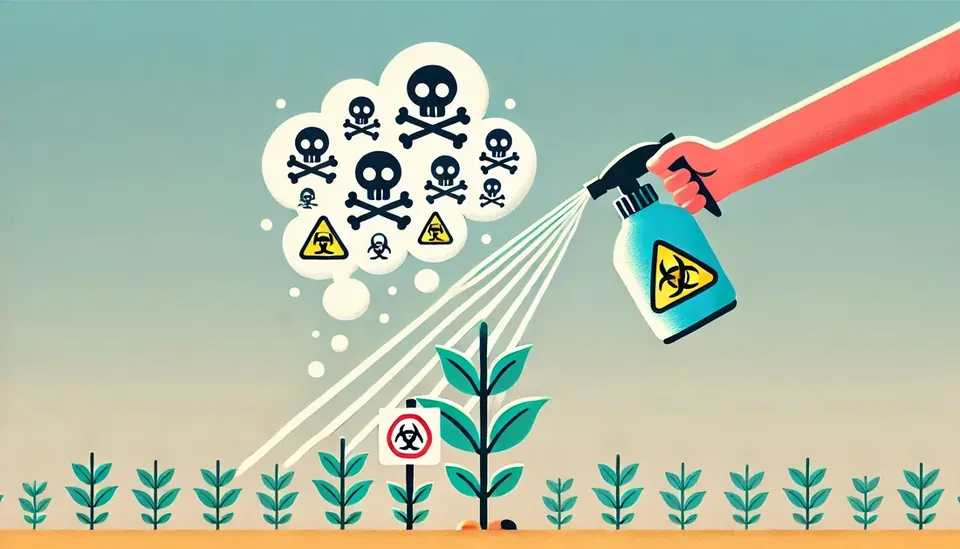
Pesticide use remains the main strategy in modern agriculture for combating and preventing agricultural pests, weeds, and diseases. Although effective at increasing productivity, these chemical compounds can leave residues in the foods consumed by the population. Consequently, the widespread use of these compounds in agricultural settings has been associated with environmental contamination and human health problems worldwide [1, 2]. Several studies indicate that chronic exposure to pesticides may be associated with a range of health problems, including hormonal disorders, damage to the nervous system, and, in more severe cases, an increased risk of cancer [3].
In this context, companies such as OpenScience have stood out by helping to accurately identify pesticide residues in agricultural products such as coffee, and by collaborating with large cooperatives to ensure food quality and safety. OpenScience uses advanced chromatography and spectrometry techniques to identify even the smallest amounts of pesticides, providing critical data that support decision-making and compliance with legislation.
In addition to the risks to human health, the environmental contamination caused by the indiscriminate use of pesticides can affect soil, water, and even other forms of life, such as pollinating insects, causing ecological imbalances [4]. To face this challenge, OpenScience also provides consulting services to companies in the agribusiness sector, offering technological solutions that help reduce environmental impact and improve the sustainability of agricultural production.
More Conscious Consumers
In recent years, consumers' concern about pesticide intake through food has increased considerably. With growing awareness of the impacts of chemical residues on health, many consumers have been seeking information about the origin of the products they buy, as well as about the pesticide levels present in their food choices. This concern is even greater among people who prioritize healthy eating, opting for balanced diets and more natural products.
Consequently, in recent years consumers' concern about pesticide intake through food has increased considerably. With growing awareness of the impacts of chemical residues on health, many consumers have been seeking information about the origin of the products they buy, as well as about the pesticide levels present in their food choices. This concern is even greater among people who prioritize healthy eating, opting for balanced diets and more natural products. In a survey conducted in Europe, when asked about a limited number of food-related issues, consumers considered the use of pesticides, antibiotics, and additives in food production to be the most worrying. A recent study commissioned by EFSA (the European Food Safety Authority) concluded that 86% of respondents were very or fairly concerned about the use of these substances in food production (see Fig. 1).
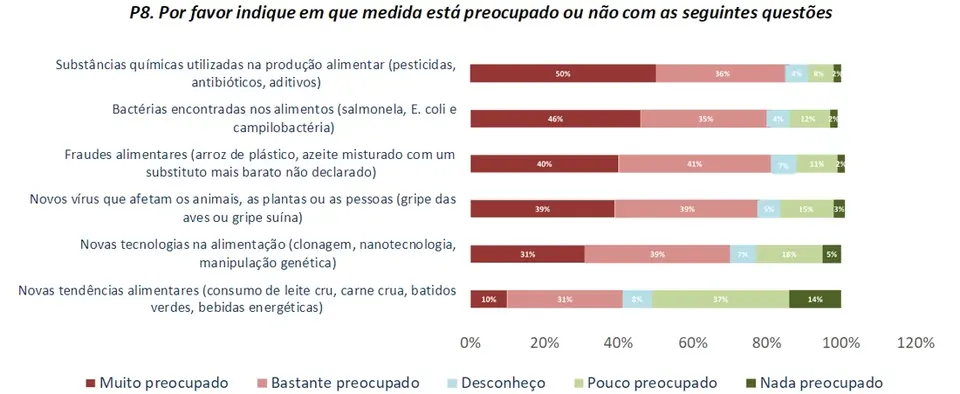
Source: Etienne, J. et al., EU Insights – Consumer perceptions of emerging risks in the food chain (EU Insights - Consumer Perceptions of Emerging Risks in the Food Chain) [5].
As a result, companies are increasingly alert, which shows that those that fail to associate their brand positively with these issues may lose consumers. In other words, they need to better understand new consumer patterns, since their survival as a business, in the medium and long term, depends on them. Therefore, companies will need to do more than show: they must prove, through their products, services, and operations, that they assume effective commitments in terms of responsibility for the life of the planet, of people, and of the businesses themselves. These points will increasingly be an important part of the longevity of organizations [6-7].
OpenScience, through its work in the agribusiness sector, has contributed directly to enabling producers to guarantee the quality and safety of their food, using cutting-edge technologies to detect the presence of pesticide residues. By collaborating with the world's leading grain and coffee producers, OpenScience plays an essential role in strengthening sustainable agricultural practices.
Government Regulations
Legal and commercial obligations have led companies in the food sector to increase their efforts regarding the chemical contamination of their products. OpenScience has helped companies in the sector comply with stringent regulatory requirements through detailed analyses and reliable diagnostics, ensuring that foods are within acceptable limits of chemical residues.
The greatest example of contaminant control comes from Europe, where pesticide use is strictly controlled and several substances confirmed to be harmful to human and environmental health have been banned, even though they continue to be produced and sold to emerging countries such as Brazil. The European Union (EU) is the world's largest importer of agricultural and food products, and it enforces strict inspection of these imports to ensure that they comply with the legislation in the same way as food produced in the EU. As a principle, all food products on EU markets must be safe, regardless of their origin [8].
Brazil's Situation in the Global Pesticide Context
Major agricultural producers such as Brazil have increasingly sought greater openness in trade with the EU, but one of the barriers is precisely the use of pesticides above acceptable limits. Since 2008, Brazil has been the world's largest consumer of agrochemicals [9]; in addition, many of the active ingredients used in our country are banned in other markets. Furthermore, Brazil also exceeds the acceptable Maximum Residue Limits (MRLs) when compared with the EU, and thus ends up losing ground in the European market. Moreover, in recent years some Brazilian agricultural products, such as fruits, vegetables, and grains, have failed international tests because of pesticide residue levels above those permitted. Notable cases include products such as soybeans and coffee, which already face trade barriers in markets such as the EU and the USA due to the presence of unauthorized pesticides or levels above those permitted by international legislation [10].
As we can see, there is a global concern about pesticide contamination in food, and Brazil is frequently cited in international studies on the use of agrochemicals.
How Can the Use of Pesticides Be Controlled and Monitored?
Discussing food quality control, particularly pesticide residue analysis, is a complex matter, as it involves different concepts, technologies, investments, and, above all, specialized labor. OpenScience offers complete analysis and consulting solutions, employing chromatography, spectrometry, and chemometrics to ensure more sensitive and selective analyses. These technologies allow agro-industrial companies to obtain accurate results while maintaining quality and compliance with international regulations.
The Role of OpenScience
With our extensive experience in the agricultural sector and our mission of democratizing access to high-quality technology, OpenScience is expanding its activities into several areas of agribusiness, with the aim of providing innovative solutions that meet the needs of producers. We believe that partnership between companies and institutions is essential to improving the future of the agricultural sector, and we are ready to collaborate with companies seeking excellence and innovation.
Contact us so that we can develop innovation solutions that will contribute to improving the quality of your products and to the sustainability of the agricultural market.
References
de Oliveira, L.A.B., H.P. Pacheco, and R. Scherer, Flutriafol and pyraclostrobin residues in Brazilian green coffees. Food Chemistry, 2016. 190: p. 60-63.
Piccoli, C., et al., Pesticide exposure and thyroid function in an agricultural population in Brazil. Environmental research, 2016. 151: p. 389-398.
Kucharski, K.W., Câncer e agrotóxico: uma análise na região de saúde fronteira noroeste do Rio Grande do Sul. 2021.
Lopes, C.V.A. and G.S.C.d. Albuquerque, Agrotóxicos e seus impactos na saúde humana e ambiental: uma revisão sistemática. Saúde em debate, 2018. 42(117): p. 518-534.
ICF, et al., EU Insights–Consumer perceptions of emerging risks in the food chain. EFSA Supporting Publications, 2018. 15(4): p. 1394E.
Vieira, G., Estudo do perfil do potencial consumidor de vestuário sustentável na cidade de Florianópolis. 2016.
Voltolini, R., Vamos falar de ESG?: Provocações de um pioneiro em sustentabilidade empresarial. 2021: Editora Voo.
Wodtke, G.D.G., Segurança alimentar: o acesso à informação sobre agrotóxicos na jurisprudência do Tribunal de Justiça da União Europeia. 2023.
Braga, V.d.S.M., Gestão de risco no uso de pesticidas: uma análise jurídica no Brasil e na União Europeia. 2022.
Alves, R.F., Atlas do agronegócio: fatos e números sobre as corporações que controlam o que comemos. Revista Verde Grande: Geografia e Interdisciplinaridade, 2021. 3(01): p. 222-227.