
Every day we experience a wide range of sensations, from the aroma of a coffee and the taste of a meal to someone's perfume. These sensory perceptions account for many of our everyday pleasures, but they are also important for our survival, alerting us to potential dangers such as spoiled food and the presence of gases in the environment.
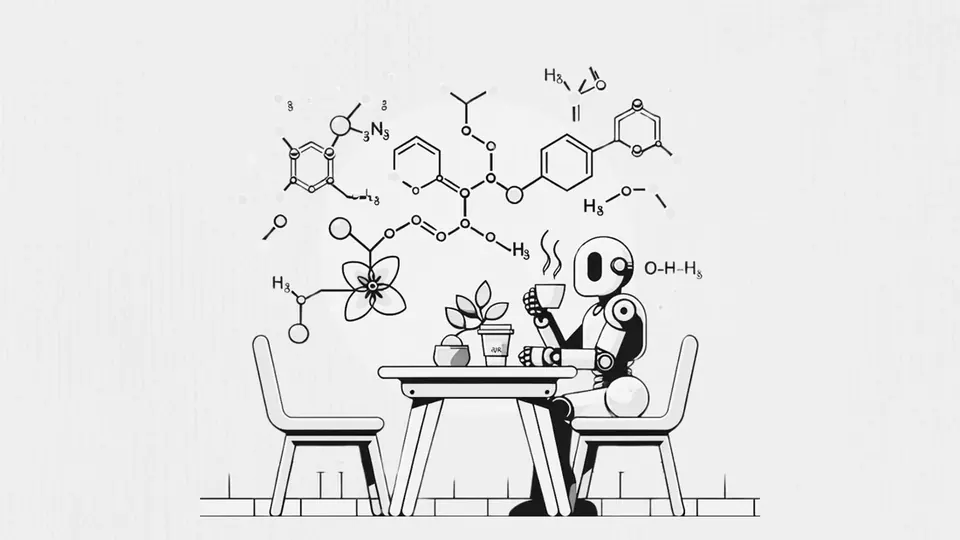
Since taste and smell are such distinctly human traits, could artificial intelligence (AI) "feel" something similar?
Yes! It is possible to map chemical compounds and relate them to smells and tastes. However, for AI to "have these sensations," it needs help from other technologies.
Electronic noses and tongues, for example, capture information from a variety of volatile chemical compounds and gases. This information generates complex data that, with the aid of artificial intelligence, can be used to detect and analyze aromas and flavors with surprising precision. This technology has significant implications, from monitoring air quality to identifying diseases through breath analysis.
Another interesting possibility is the use of chromatography and mass spectrometry to identify volatile compounds with very high sensitivity. These techniques are highly advanced and allow the precise, objective identification of compounds related to flavors and sensations. Commonly referred to as chemosensory approaches, they can be applied to the sensory mapping of beverages and foods, supporting food quality assessment in industry and even helping to identify adulteration and fraud.
It is impressive to see how these technologies, combined with the data-processing power of AI, are increasingly embedded in industry and research, and are even capable of replicating and expanding our sensory capabilities.
In a world where AI is so highly developed, it is increasingly important for companies to stay ahead in the market. For this reason, we at OpenScience apply our expertise in sensory chemistry, instrumental analysis and artificial intelligence to help companies develop customized, innovative solutions that enable specialists to enhance their responsiveness through new technologies and chemical data science.