

In clinical mycology, accurate and rapid identification of fungal species is essential for the diagnosis and treatment of infections. In this context, the newly appointed professor Dr. Anderson Ramos Carvalho, of the Institute of Chemistry at the Federal University of Rio Grande do Sul (UFRGS), in his postdoctoral project supervised by Dr. Marco Flôres Ferrão, used the low-cost multispectral microscope developed by OpenScience to capture digital images of pathogenic yeasts.
The study, entitled "Use of digital images combined with chemometrics for the identification and characterization of fungi", was carried out at the Department of Inorganic Chemistry at UFRGS and funded by CNPq (the Brazilian National Council for Scientific and Technological Development) and by INCT Bioanalitica - CNPq. The research set out to use digital images combined with chemometric tools to differentiate and classify different Candida species, such as C. albicans, C. tropicalis, C. krusei and C. glabrata, directly on Petri dishes with the aid of the multispectral microscope developed by Open Science.
Multispectral Microscope
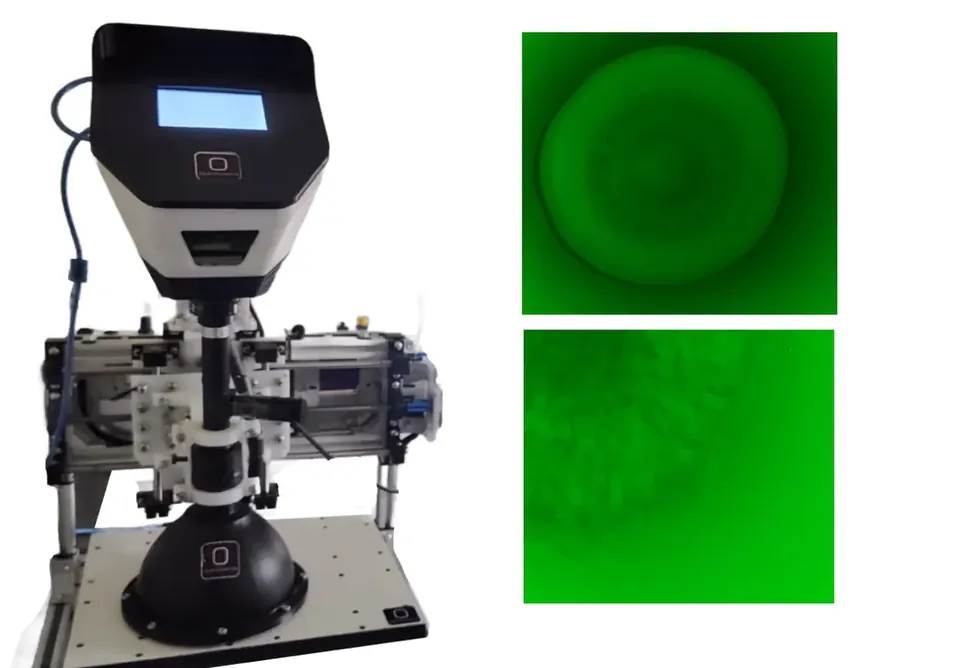
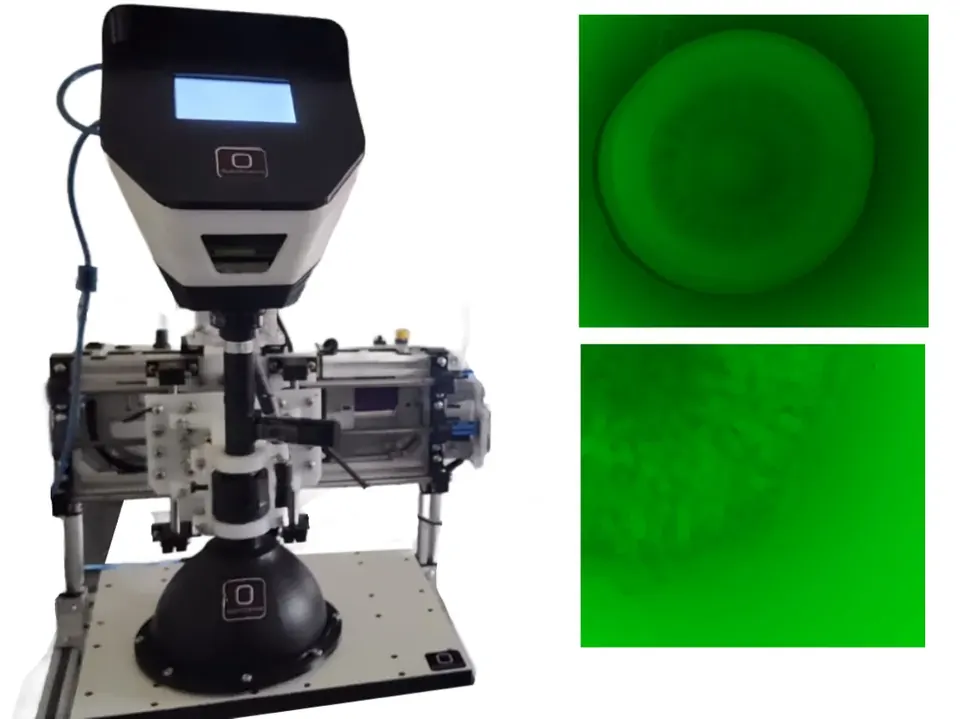
The equipment developed by OpenScience is fitted with a telecentric lens and 24 LEDs ranging from 380 nm to 1050 nm. The image below shows the Multispectral Microscope and an image of Candida krusei illuminated by the 530 nm LED.
Promising Results
The analyses showed that the different Candida species exhibited distinct spectral profiles, facilitating their identification. The methodology allowed a non-destructive, contactless analysis of the colonies, significantly improving the speed and reliability of the process.
Academic Recognition
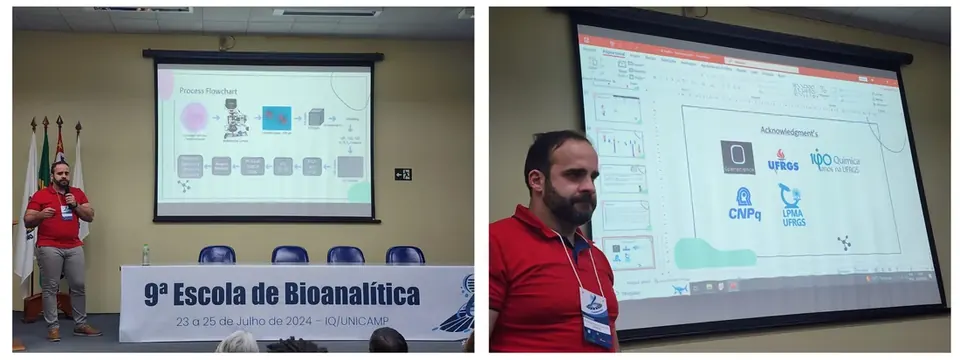 Dr. Anderson Ramos Carvalho presenting his research at the 9th Bioanalytical School at UNICAMP
Professor Dr. Anderson Ramos Carvalho highlighted the importance of the technology provided by OpenScience in his presentation at the 9th Bioanalytical School at Unicamp (University of Campinas). He stressed that "the multispectral camera made it possible to analyze each colony-forming unit individually, thanks to the image magnification, providing a non-destructive and contactless method with respect to the sample". This recognition underscores OpenScience's commitment to advancing scientific research through accessible, high-performance technologies.
Acknowledgments and Future Perspectives
OpenScience thanks Professor Dr. Marco Flôres Ferrão for supervising the postdoctoral research and Professor Dr. Anderson Ramos Carvalho for carrying out the research with the low-cost multispectral microscope. Our company remains dedicated to providing innovative technologies that drive scientific research and contribute to the academic community, always aiming at the democratization of technology.